.png)
The Trust Gap Costing You Premium Clients
Your work is good enough for premium clients. The question is whether your brand is. Here is where the trust gap hides and how to close it before they leave.
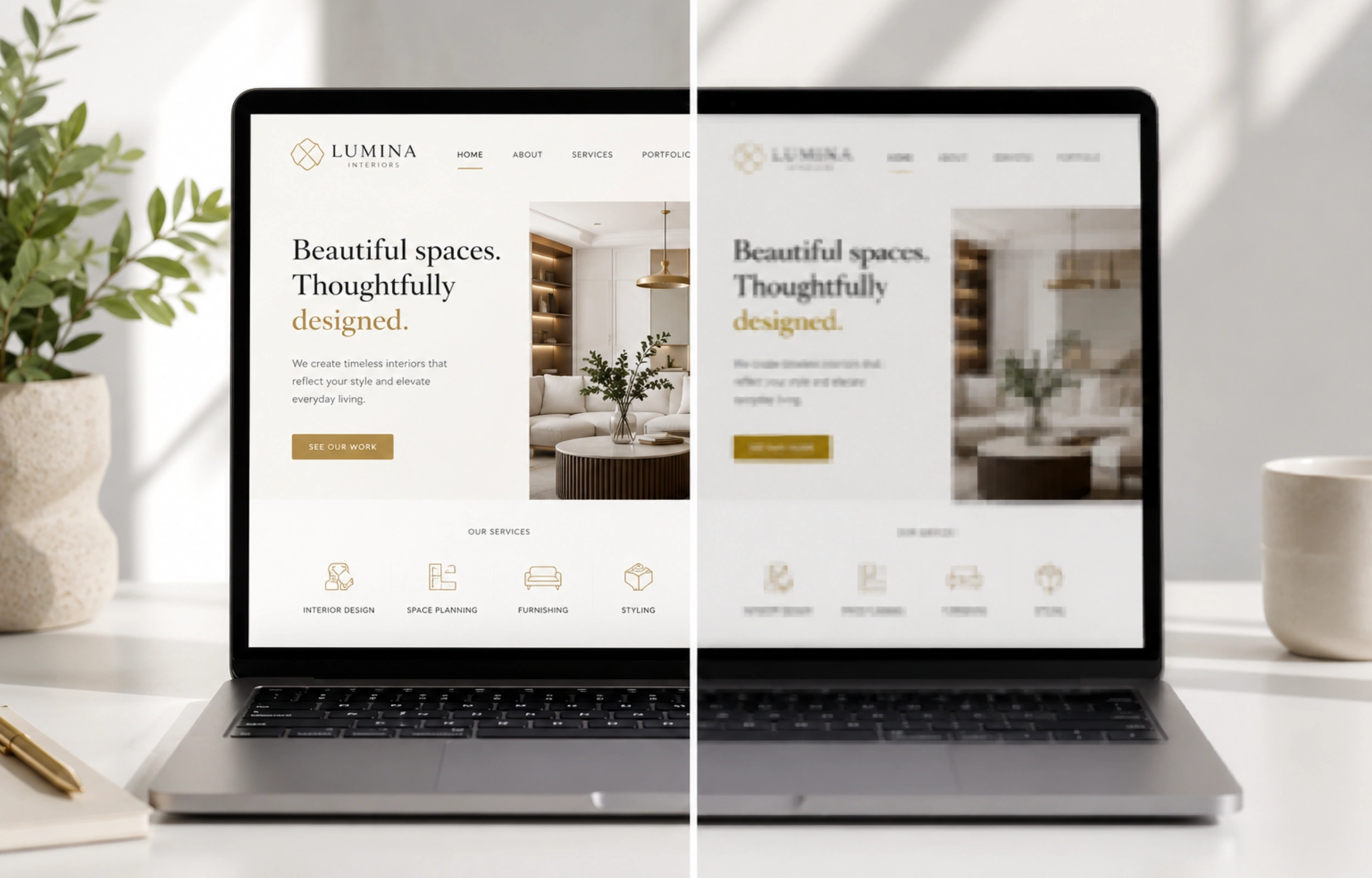
Premium clients usually don't book because of a trust gap, not your skills. They decide before they contact you, based on your website, proof and positioning. When the site doesn't match the quality of your work, the proof is vague or the positioning reads as general, they move on without telling you why.
You do excellent work. Your existing clients know it. Your results speak for themselves.
And yet, the clients you most want to work with, the ones with serious budgets who value quality and do not haggle, keep not booking. They might enquire. They might go quiet. Or they might never reach out at all, even though they found you.
The problem is almost never your skills. It is the trust gap: the space between how good your work actually is and how credible your brand appears to someone who has never met you.
That gap is costing you clients. And the frustrating part is that most of the time, the business owner has no idea it is there.
How Premium Clients Actually Make Decisions
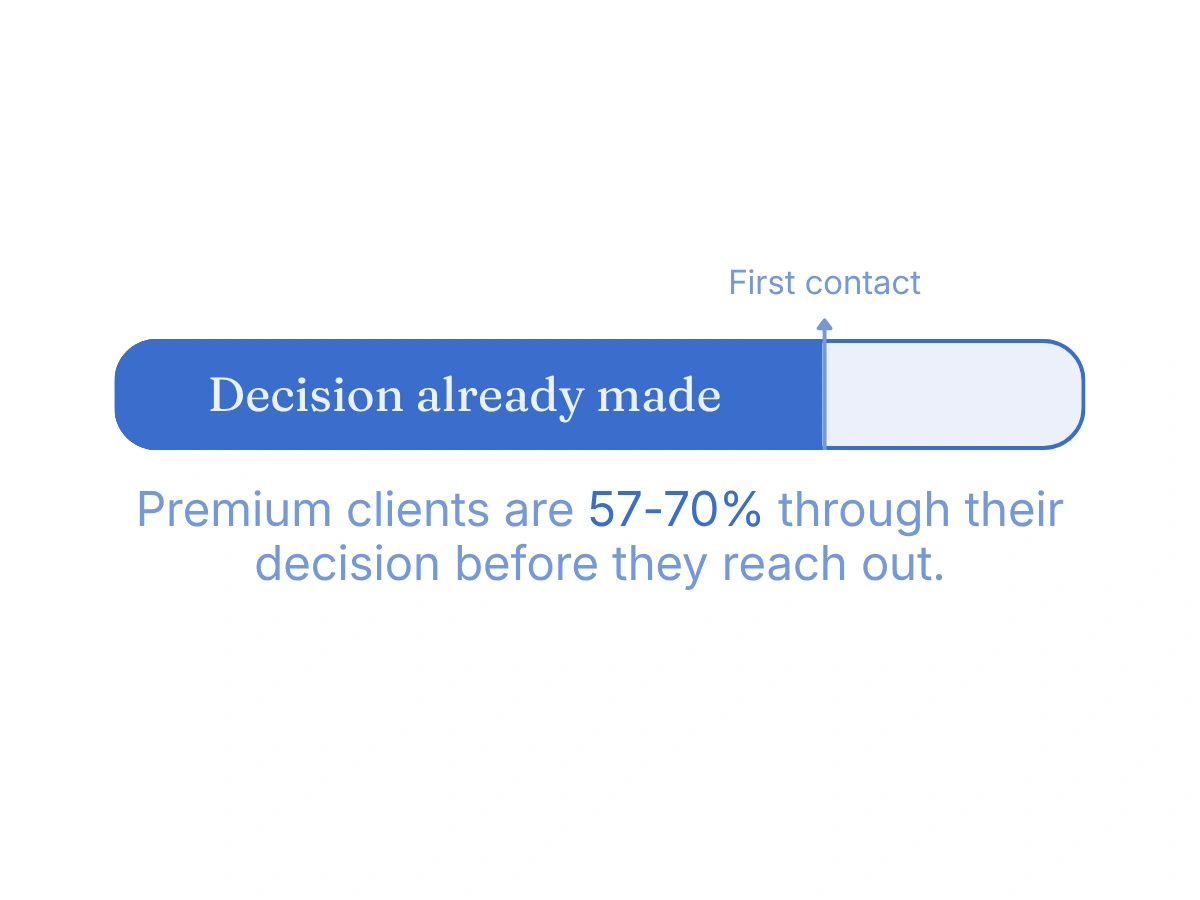
Before we talk about how to close the gap, it helps to understand what premium clients are doing before they ever contact you.
You will see figures thrown around about how far through their decision buyers are before they make contact, often somewhere between 57 and 70 percent, though those numbers come from older B2B research. I would not hang anything on the exact percentage. But the pattern matches what I see every week: most premium clients have done a lot of their deciding before they ever reach out. They are not reaching out to gather information. They are reaching out to confirm a decision they have largely already made.
That means the real sales conversation is not happening on a discovery call. It is happening on your website, on your social profiles, in your portfolio, in your testimonials, and in the general impression your brand creates at ten o'clock on a Tuesday night when someone is doing research from their couch.
If what they find does not meet the standard they expect from someone charging at the level you charge, or want to charge, they close the tab. They do not tell you why. They just move on.
What premium clients are actually looking for
Premium clients are not just buying a service. They are buying confidence. They want to know that handing this over to you will not create more risk, more stress, or more work for them.
They are looking for proof that you have done this before, done it well, and can do it for them. They want to see evidence of expertise, signs of a professional operation, and a brand that looks like it belongs in the same category as the investment they are about to make.
When those signals are absent, even excellent providers get passed over. Not because the prospect thinks you are bad at your job, but because they are not confident enough to take the risk.
Wondering whether your brand is closing the trust gap or widening it?
My brand & web audit will tell you. You get a recorded walkthrough of your website, an ordered list of what to fix, and one section rewritten so you can see the difference.
Not sure what your website is actually costing you?
Four Questions. Two minutes
Where the Trust Gap Usually Lives
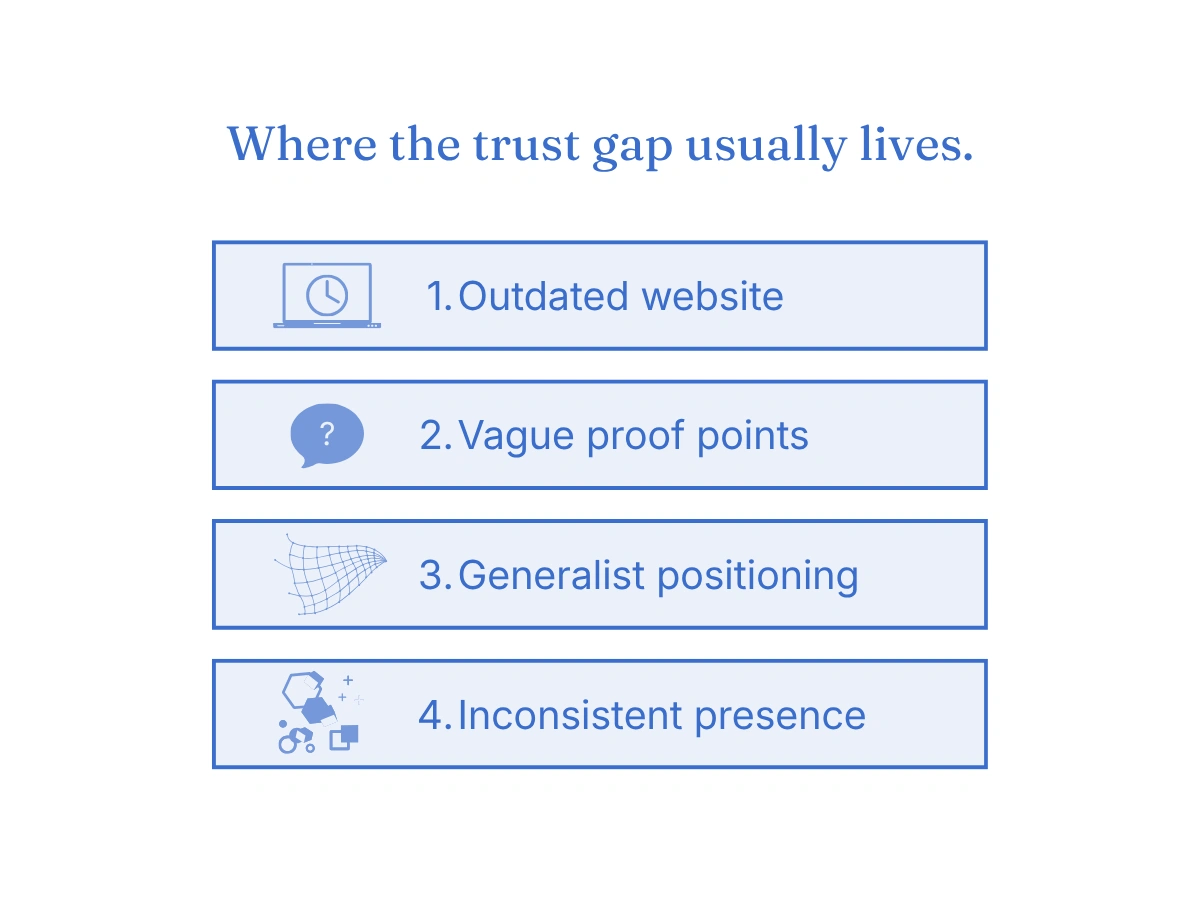
In most service businesses, the trust gap is not one big obvious problem. It is a collection of smaller ones that add up to an overall impression of 'not quite right.'
Here is where it tends to show up most.
A website that does not match the quality of the work
This is the most common one. The business has grown, the work has got better, the rates have gone up, but the website still looks like it was built in the early days when the business was finding its feet.
The mismatch creates friction. A premium client looks at the site and thinks: if this is how they present their own business, what will they do with mine? They are not wrong to ask that question. Your website is the most visible example of your work. If it is not at the standard you are asking clients to pay for, it signals a gap between your standards and theirs.
Proof points that are vague or missing
Testimonials that say 'Hayley was great to work with, very professional' are better than nothing. But they are not what closes a premium client.
What closes a premium client is specific proof. Before and after comparisons. Case studies that describe the actual problem, the approach taken, and the measurable outcome. Testimonials that speak to results, not just pleasantness.
Premium clients are investing at a level where they need to justify the decision, sometimes to themselves and sometimes to a partner or a board. Generic social proof does not give them the ammunition to do that. Specific, outcome-focused evidence does.
Positioning that reads as general rather than expert
'I help businesses with their brand and web design' describes a category. It does not establish authority.
Compare that with: 'I work with established service businesses whose referrals are strong but whose brand and website no longer reflect the level they are operating at.' That positions me as someone with a specific client, a specific problem, and a specific outcome in mind. It reads as expert rather than available.
The businesses that attract premium clients consistently are the ones that have made a clear choice about who they serve and what they do for them. Generalist positioning might feel safer because it casts a wider net, but it actively repels premium clients who are looking for a specialist.
An inconsistent presence across touchpoints
Premium clients check more than your website. They look at your social profiles. They read your Google reviews. They might look at your LinkedIn. They notice when the quality, tone, and level of professionalism varies across these touchpoints.
Inconsistency creates doubt. It suggests a business that has not thought carefully about how it presents itself, which raises questions about how carefully it will think about the client's project.
Consistency does not mean identical. It means coherent. The same level of care, the same voice, the same visual standard, wherever someone finds you.
Why Aren't Premium Clients Booking My Services?
Premium clients don't book because of a trust gap: the space between how good your work actually is and how credible your brand appears online. Most have done much of their deciding before they ever contact you. If your website, your positioning, and your proof points don't meet the standard they expect, they move on quietly, without explaining why.
What Closing the Gap Actually Looks Like
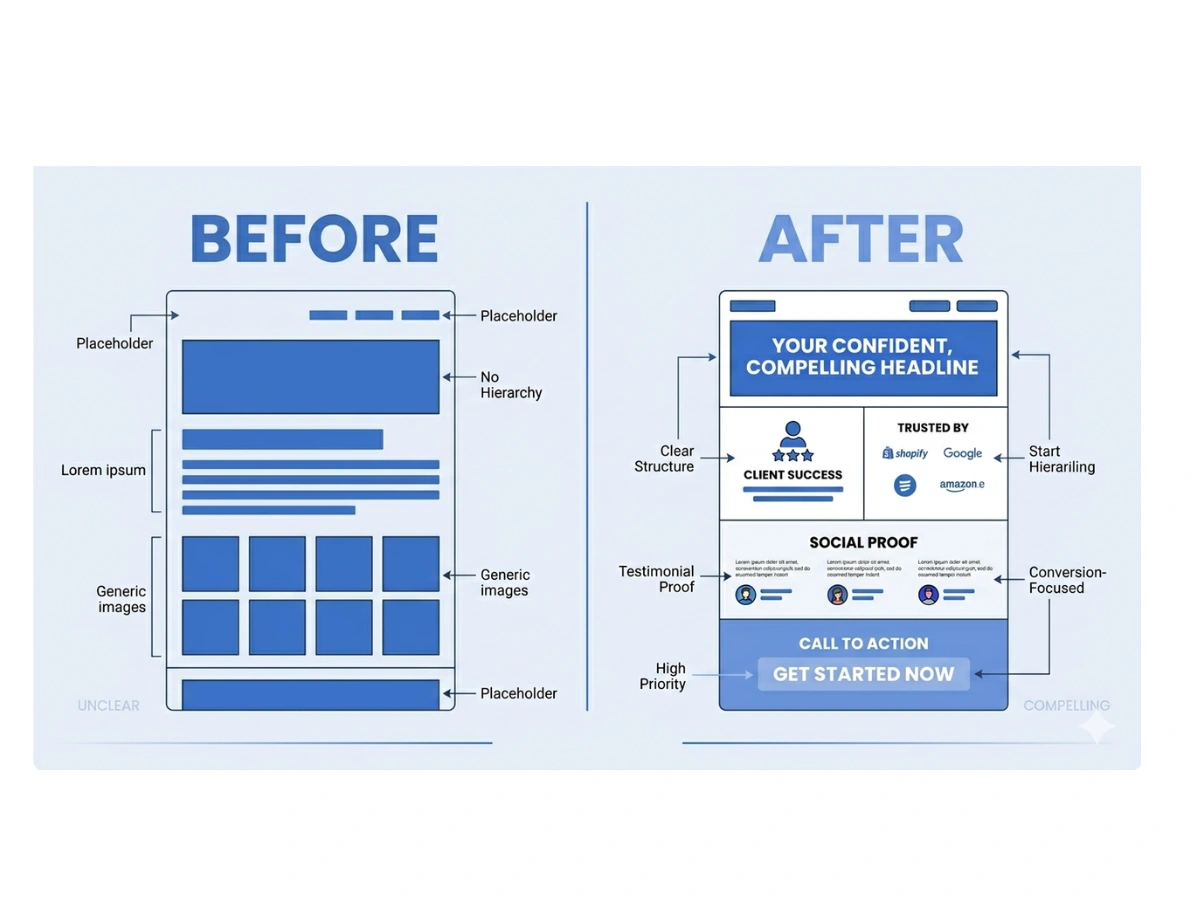
Closing the trust gap is not about a complete rebrand every two years. It is about making sure that every touchpoint a premium client encounters gives them a reason to feel confident rather than uncertain.
Start with your website. Does it look like the business you are today, or the business you were three years ago? Does the copy speak directly to the client you most want to work with, or is it written for everyone? Does your portfolio show your best work with enough context to demonstrate the thinking behind it?
Then look at your proof. Are your testimonials specific enough to do real work? Do you have case studies that a prospective client could read and think, 'that is exactly my situation'? Are those proof points visible and easy to find, or buried in a tab most visitors never click?
Finally, look at your positioning. Can someone read your homepage and know in thirty seconds who you work with, what you do for them, and what makes you the right choice? Or does it require effort to piece together?
The website is not just a brochure
The mistake a lot of service businesses make is treating the website as a place to list what they do. Premium clients do not need a list. They need to feel something when they land on your site. They need to feel seen, understood, and reassured that they have found the right person.
That requires copy that speaks to their specific situation, design that signals quality and care, and proof that demonstrates results. When those three things are working together, the trust gap closes quickly. The enquiries change in quality. The price conversations get easier. The clients who book are the ones you actually want.
What is the trust gap?
The trust gap is the space between how good your work actually is and how credible your brand appears to someone who has never met you. It is usually a collection of smaller issues, such as an outdated website, vague proof, general positioning and an inconsistent presence, that add up to an impression of not quite right. Most business owners have no idea it is there.
Why aren't premium clients booking my services?
Usually because of a trust gap. Premium clients have done much of their deciding before they contact you, so the real sales conversation happens on your website, profiles and testimonials. If your website, positioning and proof do not meet the standard they expect, they move on quietly without telling you why.
How do I close the trust gap with premium clients?
Start with your website and check it reflects the business you are today and speaks to the client you most want. Then make your proof specific, with outcome-focused testimonials and case studies that are easy to find. Finally, sharpen your positioning so someone can tell within thirty seconds who you work with, what you do and why you are the right choice.


.webp)