.png)
How to Get Consistent Clients Without Burning Out
How to get consistent clients as a service business without burning out. The positioning, website and one-channel system that ends the feast or famine cycle.

Consistent clients come from a few simple systems, not more hustle. Get your positioning clear, make sure your website turns visitors into enquiries, pick one visibility channel and show up properly, and have a system for following up warm leads. Feast and famine is usually a positioning problem, not a marketing one.
You've had months where the diary is full and months where it's a ghost town. You're not alone. Plenty of established service businesses, even ones with a steady stream of referrals, still run on a feast or famine cycle, scrambling for work the second a project wraps. It's exhausting, and it's not a strategy.
Getting consistent clients isn't about hustling harder. It's not about posting every day or chasing every lead in your inbox. It's about building a few simple systems that work even when you're not actively selling.
This post is about how to get consistent clients as a service business, properly. Not vague tips. Not "post more on LinkedIn". The actual framework that pulls service business owners off the hamster wheel and into a predictable client pipeline.
You'll learn why most service businesses have inconsistent client flow, the three things that have to be in place before any marketing channel works, and what a sustainable visibility strategy looks like when you don't have a marketing team behind you. (If referrals are your main source of work, I've written separately about why referrals stop scaling. This post is about the whole system around them.)
Let's get into it.
Why Most Service Businesses Have Inconsistent Client Flow
Inconsistent clients is rarely a marketing problem. It's a positioning problem dressed up as a marketing problem.
When clients are inconsistent, most service business owners reach for the wrong fix. They start posting more on Instagram. They redo their logo. They drop their prices. None of it works because the issue sits further upstream.
The real reason service businesses have inconsistent client flow comes down to four things, and usually all of them at once. There's no clear positioning, so no one knows exactly what you do or who you do it for. There's no website that converts the people who do find you. There's no consistent visibility channel, so leads dry up the moment you stop hustling. And there's no system in place to follow up or nurture warm leads.
Marketing channels amplify what's already there. If your positioning is muddy and your website doesn't convert, more traffic just means more confused visitors leaving without enquiring. Fix the foundations first. Then the channels work.
Consistent Clients Start With Clear Positioning
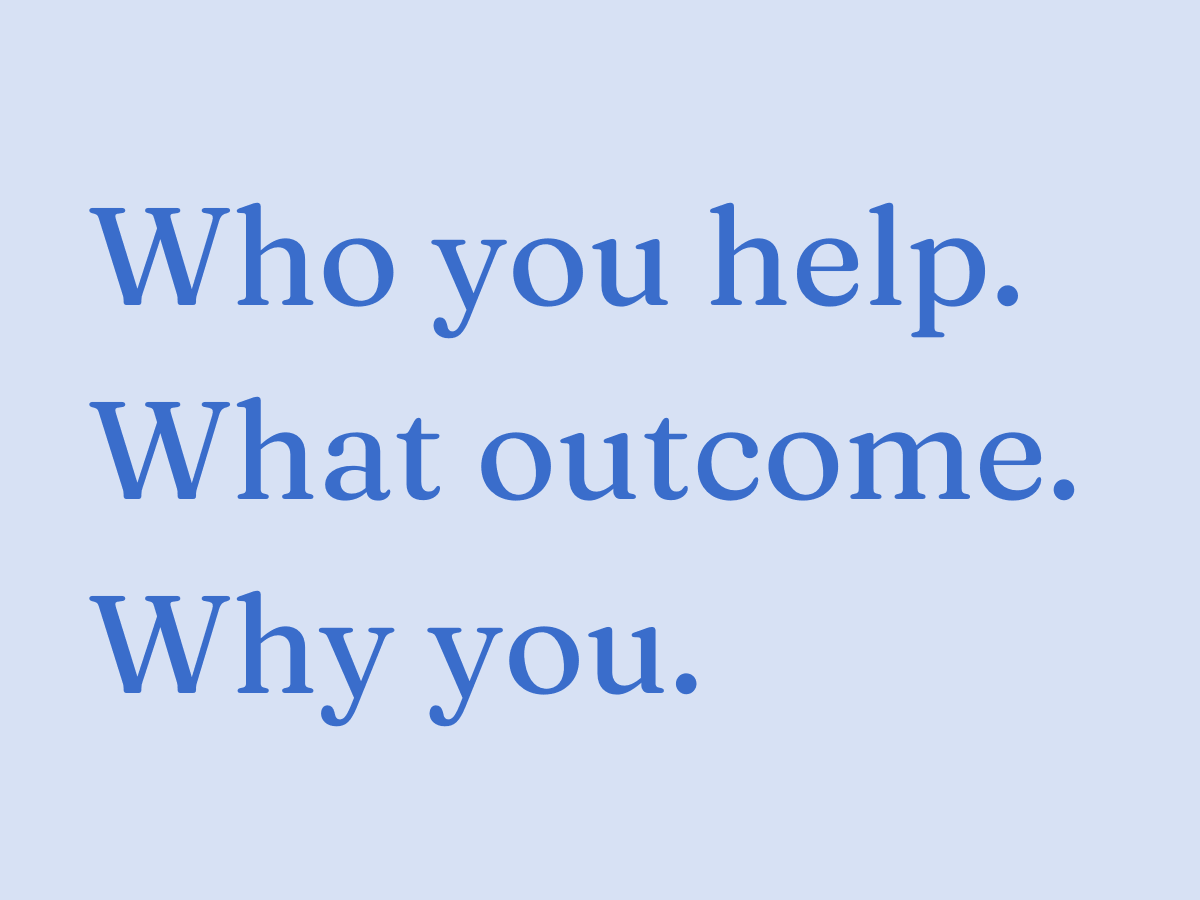
Positioning is the work most service businesses skip. It's also the work that decides whether everything you do after this point earns you clients or wastes your time.
Clear positioning answers three questions in plain language. Who exactly do you help? What specific outcome do you deliver? Why should they choose you over the other options on the table?
If you can't answer those without hedging, your ideal client can't either. That's why your ads underperform. That's why your website visitors don't enquire. That's why referrals come through, but rarely the right kind of referrals.
The cost of being a generalist
When you market to "everyone", no one feels spoken to. A bookkeeper for "small business" is forgettable. A bookkeeper for trades-based business owners who hate paperwork and want their weekends back is unforgettable. Same skill set. Different positioning. Wildly different client pipeline.
Specificity is what gets you remembered. It's also what makes every other piece of your marketing easier, because once you know exactly who you're talking to, your messaging, your offer, your website, and your visibility channels all sharpen up.
Foggy on your positioning?
Brand strategy is where consistent clients actually start. If you can't say in one sentence who you help and what you do for them, that's the gap to close before anything else.
→ See how True Bearings sorts out your positioning and website in four weeks
Your Website Is Either Converting or Costing You Clients
Most service business websites are brochures. A homepage with vague copy. A services page that lists what you do but never explains what changes when someone hires you. An about page that reads like a CV. A contact form buried at the bottom.
A website that brings in consistent clients works differently. It does three things on every page. It tells a visitor immediately who you help and what outcome you create. It builds trust through proof, not adjectives. And it makes the next step obvious.
What "converts" actually means
A converting website doesn't trick anyone. It removes friction. Every section answers the question your ideal client is asking in their head right at that moment. The headline answers "am I in the right place?" The next section answers "do they understand my problem?" The services section answers "is this exactly what I need?"
That's it. No jargon. No clever taglines that take three reads to decode. Plain language that meets people where they're at and walks them to the next logical step. Most websites lose clients in the gap between curiosity and clarity. Close that gap and the same traffic starts converting.
Not sure what your website is actually costing you?
Four Questions. Two minutes
Pick One Visibility Channel and Show Up Properly
The fastest way to burn out and stay invisible is to be on every platform halfway. LinkedIn three times a week, then nothing for a fortnight. An Instagram post when inspiration strikes. A blog updated twice a year. A newsletter you keep meaning to start.
Consistent clients come from a consistent presence, and a consistent presence is only possible if you narrow your focus.
Pick one primary channel based on where your ideal client actually spends time and what kind of content you can sustain. For most established service businesses, that's one of three. SEO and a blog if your service has search demand and you can write or commission content. LinkedIn if you sell to other businesses or professionals. Instagram if your work is visual and your client base browses there.
Pick one. Show up two to three times a week for at least six months. Track what happens. In my experience, this is where most people give up: a few months in, just before the work starts to compound.
How Do Service Businesses Get Consistent Clients?
Service businesses get consistent clients by combining clear positioning, a website built to convert, and one reliable visibility channel they show up on consistently. Relying on referrals alone creates feast or famine cycles. A defined niche, a strong brand strategy, and a predictable client pipeline built on one channel done well beats trying to be everywhere at once.
The Client Pipeline You Actually Need

A client pipeline is just a path that turns strangers into enquiries on a predictable basis. It doesn't need to be complicated. Most service businesses overengineer this.
A working pipeline has four stages, and your job is to make sure something is happening at each one.
Awareness is how new people find you. That's your visibility channel from the section above. SEO, LinkedIn, Instagram, podcasts, partnerships. Pick one and feed it.
Consideration is what happens when they land on your website. This is where positioning, copy, and design do the heavy lifting. They need to feel understood within fifteen seconds of arriving.
Conversion is the moment they take the next step. A discovery call booking. A contact form filled in. A guide downloaded. Whatever the entry point is, it has to be obvious and low friction.
Nurture is what happens between first contact and signing. A short email sequence, a follow-up call, a proposal that lands properly. This is where most leads quietly disappear.
What This Looks Like in Practice

Picture a consultant who has always relied on word of mouth (this is an illustration, not a specific client). Months of solid bookings, followed by stretches with nothing in the diary. They tighten their positioning to one specific kind of client. They rebuild their website with clear messaging and a single call to action. They pick LinkedIn as their one channel and commit to two posts a week.
Six months later, the diary looks very different.
I've seen the same pattern play out for real. When Unfurl EMDR launched a website built on clear positioning, the practice went from no online presence to two enquiries a week and a GP referral a week within two months.
Nothing in that consultant's plan is new. The brand strategy work, the website, the LinkedIn posts. None of it is a secret. What changed was the order and the commitment. Foundations first. One channel, properly resourced. No swapping platforms every time something didn't work after a fortnight.
This is the difference between marketing that performs and marketing that doesn't. It's almost never about the channel itself. It's about whether the foundations underneath the channel are doing their job.
The Bottom Line on Consistent Clients
Consistent clients are a system, not a stroke of luck. The system has three parts. Positioning that makes you the obvious choice for a specific kind of client. A website that converts traffic into enquiries. One visibility channel you commit to for at least six months.
Get those right and you stop chasing work. The work starts coming to you.
If your positioning feels foggy, your website is doing the bare minimum, or you're stuck guessing what to fix first, that's the gap to close first. The goal isn't a flashier presence. It's a steadier one.
Why is my client flow so inconsistent?
Inconsistent client flow is rarely a marketing problem. It is usually a positioning problem dressed up as one. Most service businesses are missing some combination of clear positioning, a website that converts, a consistent visibility channel and a system for following up warm leads. Marketing only amplifies what is already there, so the foundations need fixing before more activity will help.
How many marketing channels should a service business use?
Start with one. Being on every platform halfway is the fastest way to burn out and stay invisible. Choose the channel where your ideal client actually spends time and where you can sustain the content, such as SEO and a blog, LinkedIn or Instagram. Show up two to three times a week for at least six months before judging the results.
What does a simple client pipeline for a service business look like?
A working client pipeline has four stages. Awareness is how new people find you. Consideration is what happens when they land on your website. Conversion is the moment they take a clear, low-friction next step, like booking a discovery call. Nurture is everything between first contact and signing, such as follow-up emails, calls and a proposal that lands properly.