.png)
How to Build a Referral System That Doesn't Rely on Luck
A referral system for service businesses that produces clients on purpose. Four parts, where referrals leak, and the website fix most people miss.

A referral system that doesn't rely on luck has four parts. Make yourself easy to describe, make sure your website matches what the referrer said about you, ask for referrals on purpose at set moments, and build a small group of deliberate referrers. Most referrals leak at the look-up, when the prospect checks your website first.
Most of your best clients came from someone saying your name in a room you were not in.
That is lovely. It is also terrifying, if you are honest about it.
Because you cannot see it. You cannot forecast it. You cannot turn it up in a quiet month. One good referrer goes on maternity leave or sells their business and suddenly your pipeline is a tumbleweed. You are running a business on word of mouth and word of mouth does not answer you.
I hear this from established service business owners all the time. Consultants doing $15,000 to $20,000 a month, brilliant at their work, and every single client came from a referral. Not one from the website. Not one from content. They are not proud of that. They are quietly worried about it.
The fix is not to stop relying on referrals. Referrals are the highest converting lead you will ever get. The fix is to build a referral system for your service business that produces them on purpose instead of by accident. That is what this post walks through.
Why referrals feel like luck (and why they are not)
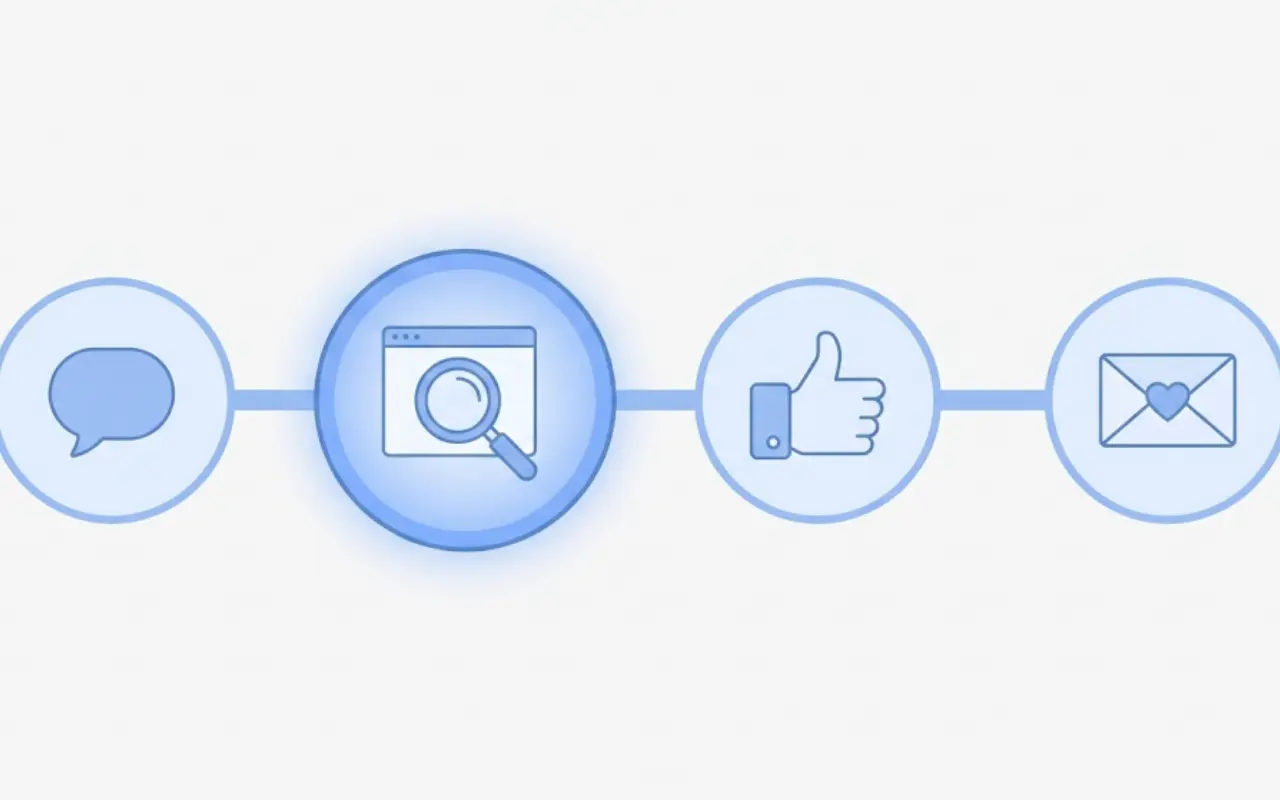
Referrals feel random because you have never looked at what triggers them. But every referral follows the same path. Someone has a problem. Someone they trust mentions you. They look you up. They decide whether to get in touch.
Four steps. You have influence over three of them. Most business owners have never touched any.
The bit you are ignoring: the look-up
Here is what happens after your name gets mentioned. The person Googles you. They land on your website. And in about eight seconds they decide whether the glowing recommendation they just heard matches what they are seeing.
If it does, you get an enquiry. If it does not, they say "oh I'll check them out" and never do. Your referrer never finds out. You never find out. You just assume the referral did not happen.
This is where a mismatch between your reputation and your website eats referrals alive. Your referrer described someone at a $15,000 level. Your website looks like a $2,000 level. The gap between those two things is the reason "so many people say they'll reach out" and so few do. I have written about this in when your website no longer matches how good you've become.
The four parts of a referral system that actually works
A referral system is not a rewards program. Nobody refers a consultant to get a $50 voucher. People refer because it makes them look good, and because it is easy. Build for those two things.
Part one: make yourself easy to describe
If your referrer has to explain what you do for two minutes, they will not bother. They need a sentence. "She fixes the gap between how good you are and how you're perceived." "He sorts out cash flow for trades businesses over a million." One line, specific, memorable.
Test it. Ask three past clients how they would describe you to a friend. If you get three different answers, or a lot of umming, that is your first job. Clarity of positioning is the foundation of every referral, and it is the thing I spend the most time on in every True Bearings engagement.
Part two: make the landing match the recommendation
Your website is the second half of every referral. It has one job: confirm what the referrer said. That means the first screen needs to say who you help and what changes for them, in plain language. It needs proof close to the top. It needs to look like the level you actually operate at.
If you are not sure whether your site is doing that, that is exactly what a brand & web audit tells you: a recorded walkthrough of your site and an ordered list of what to fix. It is the single highest leverage fix for a referral-based business, because it improves the conversion rate of every referral you are already getting.
Part three: ask, on purpose, at the right moment
Most people never ask. Or they ask once, awkwardly, at the end of a project, when the client is already thinking about the next thing.
The best moment to ask is right after a win. The client just saw the result. They are happy. They are telling their mates about it anyway. That is when you say, "If you know anyone else wrestling with this, I'd love an intro. Here's the one line that describes what I do." Then give them the line from part one.
Put it in your process. A calendar reminder 30 days after project close. A line in your final handover email. A quick message when a client shares a result. Systemised does not mean robotic. It means it happens every time instead of when you remember.
Part four: build a small bench of deliberate referrers
Not every past client will refer. But there are five to ten people in your world who could send you a client every quarter if they thought of you at the right time. Accountants, business coaches, adjacent consultants, the person who runs the networking group.
Make a list. Tell them exactly who you are looking for. Send them something useful every couple of months so you stay top of mind. Refer to them first. It is not complicated, it is just consistent.
Not sure what your website is actually costing you?
Four Questions. Two minutes
How do you build a referral system for a service business?
Start with one clear sentence that describes who you help and what changes for them. Make sure your website confirms that sentence the moment someone looks you up. Ask for referrals at a set point after every win, not at random. Then build a short list of deliberate referrers and stay in front of them consistently.
Where your referral system leaks

Even with all four parts in place, there are three places referrals quietly die. Check these first.
Your website has no clear next step
A referred visitor is warm. They want to act. If your site makes them hunt for a contact form or offers six different things to click, you lose them. One clear call to action, above the fold and again at the end.
Your proof is hidden or vague
"We've helped hundreds of businesses" is not proof. A named client, a specific result, and a quote in their own words is proof. Have a look at how I structure my case studies. Every one leads with what changed for the client, because that is what a referred visitor is looking for.
You look cheaper than the referrer said you were
This is the big one. If your referrer said "they're brilliant but not cheap" and your site looks like a template from 2017, the visitor assumes the referrer was being generous. The perceived level of your brand has to match the level of your work, or every referral is fighting uphill.
A real example of the look-up done right
Unfurl EMDR started with nothing. No brand, no website, no referral network. We built a trauma-informed brand and a website designed to confirm exactly what a GP would say when they recommended her. Within two months she was getting two enquiries a week and one GP referral a week. Her words: "Clients, GPs and paediatricians are all finding me through my website."
Notice what happened there. The referrals came because the website made them safe to give. A GP will not refer a patient to a site that looks unprofessional. Once the site matched the quality of the care, the referrals started and the website converted them.
Referrals should be your engine, not your gamble
You do not need to become a content machine or spend thousands on ads to fix referral dependence. You need to turn the referrals you already get into a system: a clear sentence, a website that confirms it, a consistent ask, and a bench of people who know exactly who to send.
The reason it feels like luck right now is because nobody has ever looked at the moment between "you should talk to Hayley" and the enquiry landing. That moment is fixable. And once it is fixed, every referral you get is worth more.
Should I pay for referrals or offer a referral fee?
For most professional service businesses, no. A referral fee can make the recommendation feel transactional and undermines trust. People refer because it makes them look good to their friends. Focus on making the referral easy to give and easy to confirm, and thank referrers personally rather than with cash.
How often should I ask clients for referrals?
Ask at set moments rather than on a schedule. The best triggers are right after a visible win, at project handover, and around 30 days after a project closes. One well timed ask per client beats repeated reminders. Put the trigger points into your process so it happens every time.
Why do people say they will contact me after a referral but never do?
Usually because what they found when they looked you up did not match what they were told. An outdated website, vague messaging or missing proof creates doubt. The referral was warm, but the look-up cooled it. Fixing the website is the fastest way to recover those lost enquiries.